Zomato, the pioneer of the Indian food delivery and fast-commerce market, which is owned by Eternal Limited, has evolved substantially. In the fourth quarter of FY25 the company posted the following: 77.7 percentage decline YoY in its net profit consolidated to Rs39 crore – down from Rs175 crore in Q4 FY24, despite the revenue of 64% YoY rise to Rs 5,833 crore. The increase was fueled by strong performance of Blinkit and Hyperpure and Hyperpure. Blinkit has also extended its dark-store network rapidly while losses increased. The results for Q1 FY26, which are due on July 21st and is expected to report an increase of 57% in YoY revenue and a boost in margins and margin improvement, with Blinkit GOV up over 133 percent YoY. As Zomato juggles profitability, growth and cash burn an organized SWOT analysis can provide an insight.
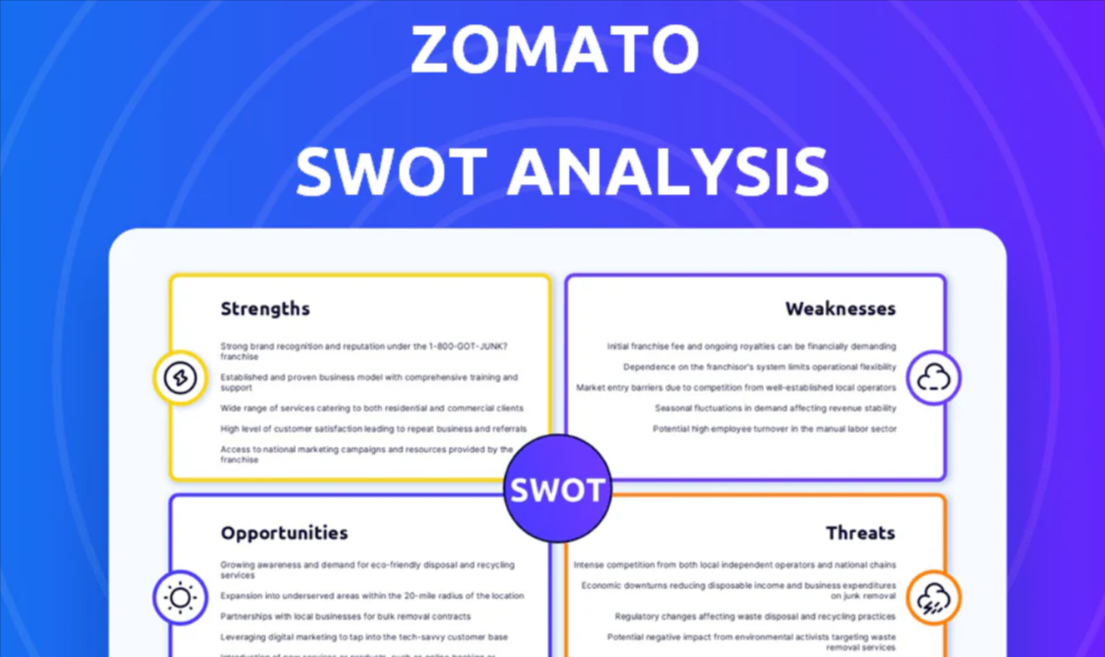
Strengths
1. Market Leadership and Diversified Business Zomato serves millions of customers through four main arms: food delivery Blinkit (quick commerce) and Hyperpure (B2B products) as well as District (ticketing). Zomato has the highest share of Indian food delivery online.
2. Rapid Growth in Revenue Food delivery revenues soared between 16 and 17 percent YoY. Blinkit GOV grew more than doubling the number of customers it serves, and Q4 FY25’s total revenue was up 64 percent YoY. Q1 FY26 is anticipated to see a consolidated increase of ~56.8 percent YoY.
3. Fast-Shopping Leadership Blinkit helps in facilitating quick trade, increasing store count dramatically. In the fourth quarter, GOV jumped to Rs1,709 crore, which is a increase of 122-133% YoY.
4. Profitability Recovery and Investor Optimism: Analysts anticipate improvement in margins: Nomura anticipates Food delivery EBITDA at 4-5% with Blinkit loss reductions reducing significantly. Morgan Stanley affirms an “Overweight” rating, with a positive balance sheet and market potential.
5. Brand Equity and Innovation Culture: Zomato has a loyal customer base powerful network effects, and rapid experiments (e.g. closing Zomato quick) Zomato is a fast-moving company and prominent in its brand.
Insufficiencies
1. Pressure on profitability: Q4 FY25’s net profit fell 78%, mostly due to Blinkit’s expansion efforts and saw losses adjusted to rise to the sum of Rs178 crore.
2. A high level of cash burn at Blinkit Rapid expansion of Blinkit led to the opening of 294 stores during Q4, resulting in a significant increase in the cost of losses and cash outflows.
3. The Core Delivery segment is experiencing a slowdown Food delivery only grew 17% YoY during the fourth quarter, which was lower than management’s expectations and impacted by the lack of partners and slow demand.
4. Reliance on Growth to Profit Recovery: Boosted margins depend on Blinkit expanding its reach and significant growth in GOV, a result that is undetermined.
Opportunities
1. Quick Commerce Boom Blinkit’s GOV is expected to hit Rs57 billion in 2030. A continued expansion could establish Zomato as a major player.
2. Profits from Food Delivery Leverage With the goal of catering EBITDA margins of 4 to 5 percent in FY26, there’s plenty of room to sustain profits.
3. Hyperpure’s B2B Expansion B2B supply component (Hyperpure) is growing quickly, able to meet the demands of cloud kitchens and restaurants–a lucrative potential.
4. The Consolidation of Services in District Integration of ticketing and event management through District’s District platform enables Zomato expand into other consumer verticals.
5. Customers who can be monetized: An enormous active user base can be expanded via subscriptions, advertising or premium plans.
Threats
1. Intense competition: Zomato competes fiercely with Swiggy in both delivery of food and QC and is also competing with new players for next day delivery.
2. Regulative Scrutiny: The delisting of 19,000 restaurants that are not compliant with the rules of GOV. Dependence on ecosystems of partners means more regulatory entanglements can happen.
3. Intense Cash Burn: Blinkit losses can stress the balance sheet. the margin pivot will depend on sharp gains in scale.
4. Risks of a Macro Slowdown: A consumer slowdown or inflation may dampen food consumption, which could impact revenues from core delivery.
5. Execution Risks: The process of scaling up QC and distribution operations can be a challenge and any logistical error can affect users’ experience and affect brand perception.
Future Outlook
Sharp Revenue Momentum Looking Ahead:Q1 FY26 results (due July 21) anticipate 56.8 percent YoY revenue growth and Blinkit growing between 122-133% and margin increase (~130 bps in QoQ).
Quick-Commerce Targeted Break-EvenZomato hopes to reach EBITDA breaking even in Blinkit in the coming three to four quarters, based on efficiency in stores and the increase in take-rate.
Stable Food Delivery MarginsWith EBITDA currently set at 4-5 percentage, Zomato could shift from growth-first to sustainable profit in its primary business .
Multiplying into B2B, and District:Scaling Hyperpure and District can help balance revenue and improve profit mix above the core service.
Cash Flow and Valuation UpsideWith Morgan Stanley bullish on the long-term TAM of QC and its profitability trends, Zomato may unlock significant upside potential for its shares, ranging from 3/4 to 3 due to its solid execution .
Efficiency and Competition Balance:Strategic pricing and quick-commerce efficiency will determine if Zomato can maintain its leadership in the face of increasing competition.
Zomato is in a crucial phase: balancing rapid expansion in fast commerce and reviving the discipline of margins in food delivery. If Blinkit is able to scale up and its profits are stable the company may evolve into a self-sustaining platform for multi-vertical services. Implementation in the coming 2-3 quarters will determine if growth is profitable or continues to drain the cash.
