
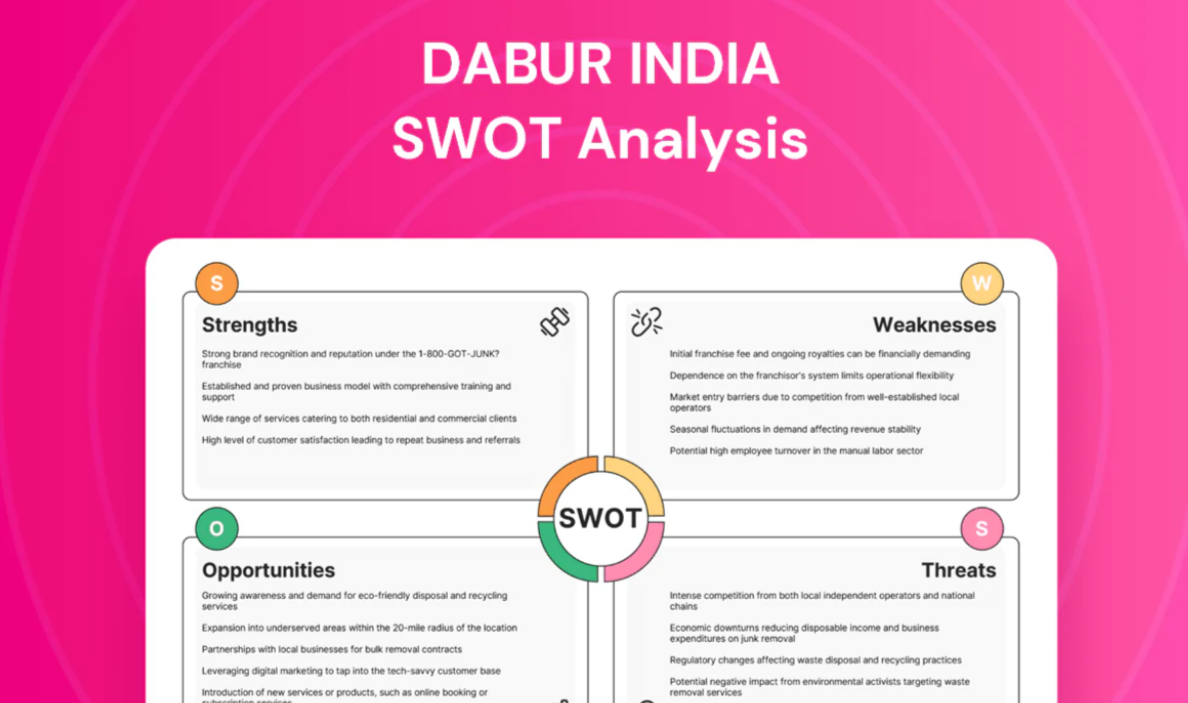
Dabur one of India’s top Ayurvedic and wellness-oriented FMCG businesses, earned an amount of Rs2,830 crore during Q4 FY 2025 revenues and a Net Profit in the amount of the sum of Rs320 crore in the quarter, the decline of 8 percent due to continued low urban demand as well as inflationary headwinds. The full-year FY 2025 revenues climbed slightly to 12,563 crore in the year to ~1.3 percentage YoY, and the net profit for the year totaled 1 768 crore which was up by 4percent. Despite slowing domestic growth Dabur’s international operations saw strong growth in constant currencies — 19 percent in the fourth quarter and 17% for the whole year–which helped to stabilize its performance. In this context, Dabur continues to expand its market share with Ayurveda-inspired innovation and a vast rural footprint.
Strengths
1. Deep Brand Heritage & Trust founded in 1884 Dabur’s Ayurvedic tradition makes it one of the top wellness brand names with a strong stake in hair care, health oral care, categories of juice.
2. A wide range of products and distribution Dabur has over 250 products in the areas of health, personal care drinks and more. Dabur is present in more than 6 million retail outlets across India along with operating in over 100 international markets.
3. Market Share Growth in key Categories In the fourth quarter of FY25’s fiscal year, Dabur increased its share in the majority of its portfolio. Hair oils recorded an all-time high of 19.1 percent share, juices rose to 60.6 percentage, and air fresheners and toothpaste also increased shares.
4. The strength of international business is that its business were up 19% during Q4 as well as 17% through the course of the year, which helped combat the weakening of domestic demand.
5. Regular R&D & Product Innovation: Dabur invests in Ayurvedic innovations, from immunity boosts to natural skincare, focusing on urban millennials and health-conscious consumers.
The weaknesses
1. Dependence on the Core Flagship Product: A large part of revenue comes from staples such as Chyawanprash, Dabur Amla, and Real Juice, making growth susceptible to shifts in demand based on categories.
2. Slow Growth Despite Urban Strain Domestic demand remained at a low level throughout FY25. Food and drinks saw a drop in Q4 and operating margins dipped in several categories.
3. Limited Premium positioning: Dabur lags behind in premium personal health, organic wellness and millennial-focused categories when compared with the global brands, or D2C brands.
4. Risks of Quality Perception and Regulation Problems such as fraudulent “100 100% fruits juice” claims have drawn regulatory scrutiny, which could affect the trust of consumers in certain categories of juice.
Opportunities
1. Wellness and Premiumization Expansion The rising demand for probiotics, Ayurveda-driven immune system and plant-based products allows for a greater prices through premium versions.
2. Digital growth and E-commerce Increased online reach – especially for urban millennials – can help boost growth in direct-to-consumer and high engagement channels.
3. International Market Expansion The untapped opportunity is still present within Africa, MEA, and SAARC through acquisitions, exports and local partnerships to increase the revenue generated from overseas.
4. Diversification into Related Categories By leveraging acquisitions such as Badshah Masala and Sesa Care, Dabur can drive growth in the food technology as well as personal wellness and skincare.
5. Sustainability and ESG Integration: With targets such as net-zero carbon in 2045 and a greater increase in renewable energy usage, Dabur can attract ESG-sensitive investors and consumers.
Threats
1. Intense FMCG Competition: Dabur faces competition from global giants like HUL, ITC, and local players including Patanjali–especially in urban and premium segments.
2. Economic and Rural Volatility A drop in rural income or food inflation that is high can have a significant impact on sales at one of the major distribution channels.
3. Rough Material Price Inflation Price fluctuations for herbal extracts and packaging and supply chain costs can pose a risk to margins If not addressed in time.
4. Quality and Regulation A negative regulatory decision regarding product claims or quality issues on foreign markets can affect brand image particularly in the juice and health care segments.
5. The threat of brand dilution Expanding too widely without a clear segmentation of the brand could weaken Dabur’s Ayurvedic position in the eyes of core consumers.
Future Outlook
urban & Rural Demand Recoveries:If cities’ spending improves over the next two quarters of fiscal year and the economic environment improves, Dabur could regain topline momentum, especially through rural and premium channels.
Margin Improvement Using Mix and Productivity Continued gains in market share and better cost management and a reduction in the cost of advertising (down to 4% in Q4) could help to boost margins in FY26.
Health & F&B Growth Engine:Foods business grew ~14 percent in Q4 and other supplements and wellness products could bring more lucrative income streams.
Global Growth Contribution Strong 17-19 percent expansion in operations overseas gives an underlying stability, particularly as India demands fluctuate.
Digital-First Innovation and brand refresh:Greater investments in D2C and millennial-inspired IPL-style branding and clean-label launches could aid in tapping new segments and revive youth-focused relevance.
Strategic Acquisitions and Expansion of Category:Consolidation in wellness, F&B and skin care, such as those recently announced Badshah as well as Sesa Care deals–could broaden the revenues and lessen the dependence on the legacy products.
Dabur India remains a trusted FMCG firm, bolstered by the centuries of Ayurvedic brand equity and the size. But challenges in urban consumption in particular, as well as the impact of category headwinds on growing competition call for a shift in strategy. A strong execution of high-end offerings, digital innovation and growth across the globe – paired with the discipline of operations will determine if Dabur keeps its lead or slips towards stagnation in India’s rapidly evolving FMCG market.